
Sheen That Resists Daily Wear
Concrete Polishing in Wilson for interior floors where appearance and stain resistance matter
Polished concrete creates a high-gloss surface by progressively refining the substrate with diamond abrasives, removing the porous top layer and densifying the concrete to resist moisture and staining. Carolina Seal Pro polishes concrete for residential and commercial spaces across Eastern North Carolina, where humidity and seasonal moisture make untreated floors vulnerable to discoloration and surface degradation. The multi-stage process transforms dull, unfinished concrete into a reflective surface that requires minimal maintenance and holds up under foot traffic without showing scuff marks or absorbing spills.
The polishing process starts with coarse diamond grinding to level the surface and expose aggregate, then progresses through finer grits to refine the finish. Each pass removes scratches from the previous grit and increases the surface density, closing pores and creating a smoother profile. A chemical densifier is applied during the intermediate stages to harden the concrete and improve abrasion resistance. The final passes with ultra-fine diamonds produce the gloss level, ranging from a low sheen to a mirror-like finish depending on your preference and the space's functional requirements.
Request a detailed estimate based on your floor size, existing condition, and desired sheen level.
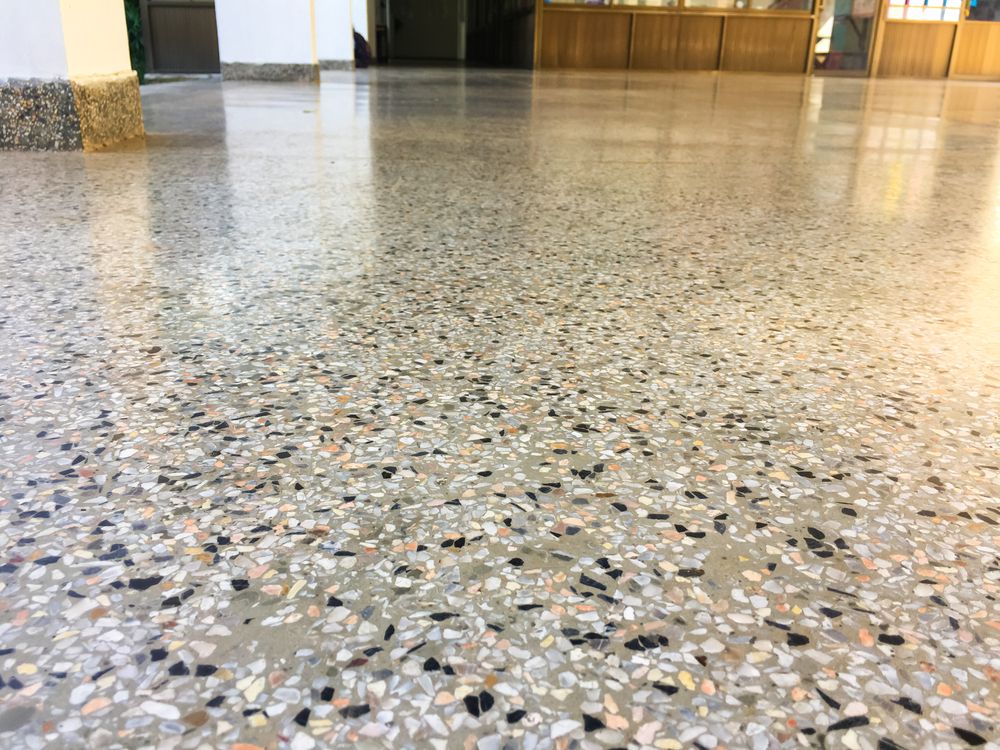
Why Multi-Stage Refinement Works for Durability
Each diamond grit stage removes a thin layer of concrete, gradually closing the pore structure and increasing surface hardness. By the time the final grit passes over the floor, the concrete has been densified to the point where liquids no longer penetrate and dirt cannot settle into the surface texture. This densification process is what separates polished concrete from simply grinding and sealing—the substrate itself becomes harder and more stain-resistant, not just coated with a protective film.
You'll notice spilled liquids bead on the surface and wipe away cleanly, without leaving dark stains or watermarks. The polished finish reflects overhead lighting, which brightens the space and reduces the need for additional fixtures. Because the sheen comes from mechanical refinement rather than a topical coating, there's no film to wear off or peel, meaning the floor maintains its appearance longer and requires only routine dust mopping and occasional damp cleaning to stay presentable.
Polished concrete works well for showrooms, retail spaces, and residential living areas where you want a sleek, modern look without the maintenance demands of tile or hardwood. The process does not add coatings or adhesives that can fail over time, so the floor's durability depends on the concrete's inherent strength rather than the bond between layers. If the surface gets scratched or dulled in high-traffic zones, those areas can be re-polished without redoing the entire floor.
Answers to Frequent Service Questions
Property owners in Wilson, Greenville, Rocky Mount, and the Raleigh-Chapel Hill area typically want to understand the refinement process, maintenance expectations, and how polished concrete compares to coated systems.
What determines the final gloss level of polished concrete?
The grit sequence and number of passes with ultra-fine diamonds control the sheen—stopping at a medium grit produces a satin finish, while continuing through the finest grits creates a high-gloss, reflective surface.
How does polished concrete handle staining from oil or chemicals?
The densifier hardens the concrete and closes the pore structure, which prevents most liquids from penetrating—however, highly acidic or alkaline substances left on the surface for extended periods may still cause discoloration and should be cleaned promptly.
Can you polish concrete that has existing cracks or surface damage?
Minor cracks can be filled prior to polishing, but large structural cracks or spalled areas may remain visible after refinement—polishing improves the appearance and durability of the intact concrete but does not repair underlying substrate damage.
How long does it take to polish a residential garage or commercial space?
Most residential floors require two to three days for the full grit progression and densifier application, while larger commercial projects depend on square footage and the starting condition of the concrete.
What ongoing maintenance does polished concrete need?
Routine dust mopping and occasional damp mopping with a pH-neutral cleaner keep the surface clean—avoid acidic or abrasive cleaners that can dull the finish, and plan for occasional re-polishing in high-traffic areas as the sheen wears down over years of use.
Carolina Seal Pro brings the necessary diamond grinding equipment and densifier products to your location, handling the entire refinement process on-site. Call (252) 296-6150 to arrange an evaluation and discuss sheen options for your project.