Surfaces Designed for Year-Round Exposure
Grind and Seal Concrete in Wilson for floors subjected to humidity and seasonal temperature shifts
Unprotected concrete in Eastern North Carolina absorbs moisture during humid months and experiences thermal contraction when temperatures drop, leading to surface degradation that accelerates over time. Carolina Seal Pro grinds and seals concrete floors to create a barrier that resists moisture intrusion and extends the functional lifespan of the substrate. The grinding process exposes fresh aggregate and removes surface contaminants, while the sealer penetrates the pore structure to lock out water and prevent freeze-thaw damage.
The process begins with diamond grinding equipment that removes the top layer of concrete, eliminating stains, coatings, and laitance that prevent sealer penetration. Once the surface is clean and level, a concrete sealer is applied according to the manufacturer's coverage rate, filling the microscopic pores and creating a protective film that bonds to the substrate. This approach works for both interior garage floors and exterior patios where exposure to weather demands a durable, low-maintenance finish.
Arrange an on-site consultation to review your substrate condition and determine the appropriate sealer formulation.
How Sealing Addresses Moisture Penetration
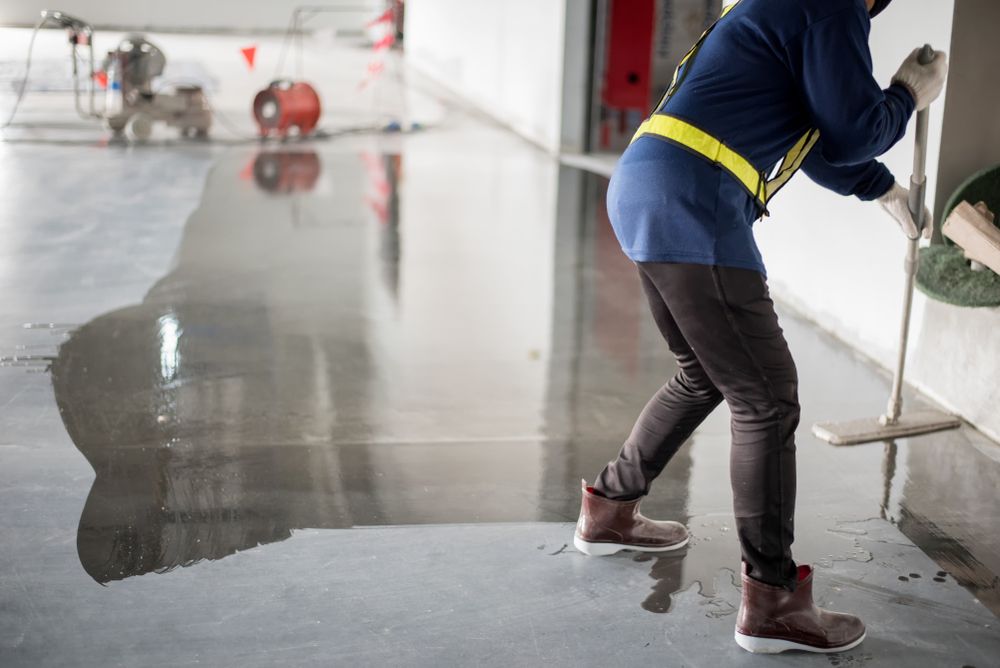
Grinding opens the concrete pore structure and removes the weak surface layer that often traps dirt and moisture. The sealer then fills those pores, creating a hydrophobic barrier that prevents water from migrating into the substrate. This matters in humid climates where moisture vapor drives upward from the ground through the concrete slab, causing efflorescence, staining, and structural weakening over time.
Once the sealer cures, water beads on the surface instead of soaking in, which means spills and rainwater no longer leave dark stains or cause surface scaling. The floor also becomes easier to clean because dirt and oils sit on top of the sealed surface rather than embedding in the porous concrete. You'll notice the concrete maintains a more consistent color and texture, without the blotchy appearance that develops when moisture evaporates unevenly from untreated slabs.
The grind and seal approach differs from epoxy flake systems in that it preserves the natural concrete appearance while adding protection. The sealer does not add significant thickness or decorative color, making it suitable for spaces where you want a clean, industrial look without the glossy finish of a topcoated system. Depending on the sealer formulation, you may need to reapply every few years as traffic wears down the protective layer.
Common Questions About This Service
Clients in the Wilson-Raleigh corridor and Triangle region often ask about sealer types, surface preparation depth, and long-term performance before committing to the service.
What does the grinding process actually remove from the concrete?
Grinding removes the top layer of paste, exposing fresh aggregate and eliminating surface contaminants like oil, existing sealers, and laitance that would otherwise prevent the new sealer from bonding properly to the substrate.
How does sealed concrete perform in freeze-thaw conditions common to Eastern North Carolina?
The sealer prevents water from entering the concrete pores, which eliminates the expansion and cracking that occurs when trapped moisture freezes—this extends the slab's lifespan significantly compared to untreated concrete exposed to the same conditions.
What type of sealer is used for grind and seal applications?
Carolina Seal Pro selects penetrating or film-forming sealers based on the substrate condition and intended use, with penetrating sealers offering breathability for exterior applications and film-forming sealers providing higher surface protection for interior floors.
How long does the sealer last before reapplication is needed?
Most concrete sealers last three to five years under normal traffic, though high-traffic commercial areas or exterior surfaces exposed to UV and weather may require reapplication sooner to maintain full protection.
Can you grind and seal concrete that already has stains or cracks?
Grinding removes most surface stains by exposing fresh concrete, but deep cracks may need repair prior to sealing to prevent moisture intrusion through the damaged areas—surface evaluation determines what prep work is necessary before sealing.
Carolina Seal Pro handles both residential garages and commercial warehouse floors across the Wilson, Greenville, Rocky Mount, and Nashville areas. Contact Carolina Seal Pro at (252) 296-6150 to schedule a substrate evaluation and receive a detailed service estimate.